Colonial Hurricane Shutters in Crestview, FL
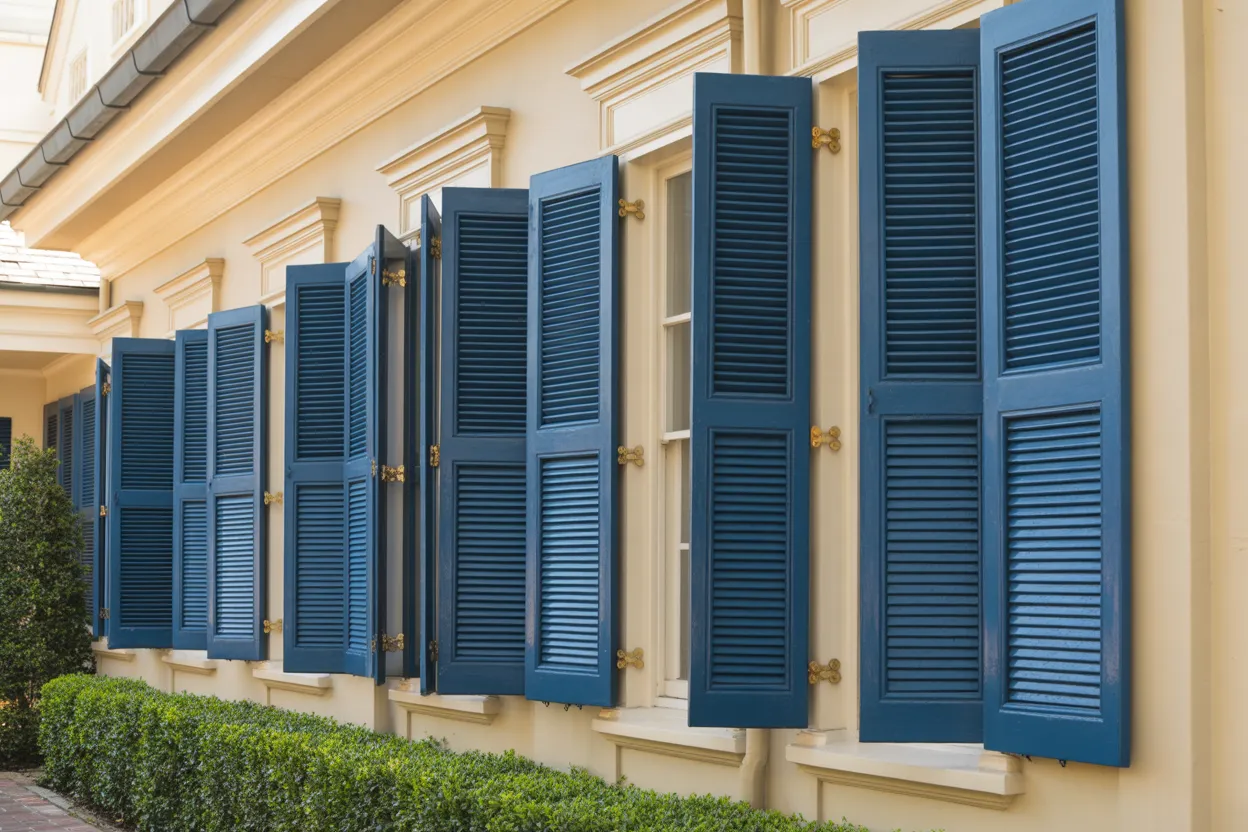
Colonial shutters are the most architecturally attractive hurricane protection available. They look like the traditional decorative shutters that flank windows on classic American homes — and that's exactly what they do every day. When a storm approaches, they swing closed, lock, and deliver hurricane-rated protection. Two jobs, one product, no compromise on curb appeal.
How colonial shutters swing shut and lock on a Crestview home
Two shutter panels are hinged on either side of the window. When open, they lay flat against the exterior wall in a traditional colonial or plantation style. To deploy, you swing both panels to the center of the window, align them, and lock with a center throw bolt and barrel bolts at the top and bottom.
Deployment takes 2 to 5 minutes per opening. That's slower than accordion shutters but manageable for a house with a typical number of openings.
Wind ratings on extruded aluminum colonial shutters in Okaloosa County
Hurricane-rated colonial shutters — extruded aluminum construction — are rated for sustained winds of 150 to 175+ mph. They meet Florida Building Code impact standards, and Miami-Dade NOA certification is available on qualifying models.
When properly installed and locked, colonial shutters are serious storm protection. They aren't decorative-only products that happen to close — they're engineered hurricane shutters that happen to look great.
Louvered, raised panel, or board-and-batten for Crestview homes
Colonial shutters come in three primary styles. Louvered panels use horizontal slats for a traditional look and allow some ventilation when closed. Raised panel is solid and flat for maximum storm protection and the cleanest modern look. Board-and-batten uses a vertical plank design with horizontal battens for a rustic or farmhouse aesthetic.
Colors run 20 to 30+ standard powder-coat options, including several wood-grain finishes. The shutters can be matched to trim, siding, or any exterior color scheme.
Why Crestview-area review boards approve colonial shutters
Colonial shutters are among the most HOA-friendly hurricane protection products available. In communities where accordion shutters are rejected on aesthetic grounds, colonial shutters are frequently approved — or even required — because they look intentional rather than industrial. If you're in a planned community or a neighborhood with an architectural review board, colonial shutters belong in the conversation.
Colonials out front, panels in back: mixing products on a Crestview house
Many homeowners use colonial shutters on street-facing windows for curb appeal and pair them with storm panels or accordion shutters on side and rear windows where appearance matters less. This approach preserves the aesthetic benefit up front while keeping overall project cost down. A contractor in the Crestview Shutters network can lay out the options during the estimate.
Wind mitigation credit for colonial shutters in Okaloosa County
Rated colonial shutters qualify for wind mitigation credit under the OIR-B1-1802 inspection form. That's the same credit tier available for other rated shutter systems, and the contractor provides installation documentation for the insurance inspection.
Get a written colonial shutter estimate in Crestview
Call (850) 801-5890 or use the contact form. Crestview Shutters will connect you with a contractor who assesses the home's openings, discusses style preferences, and provides a clear price for colonial shutters alone or in combination with other products.